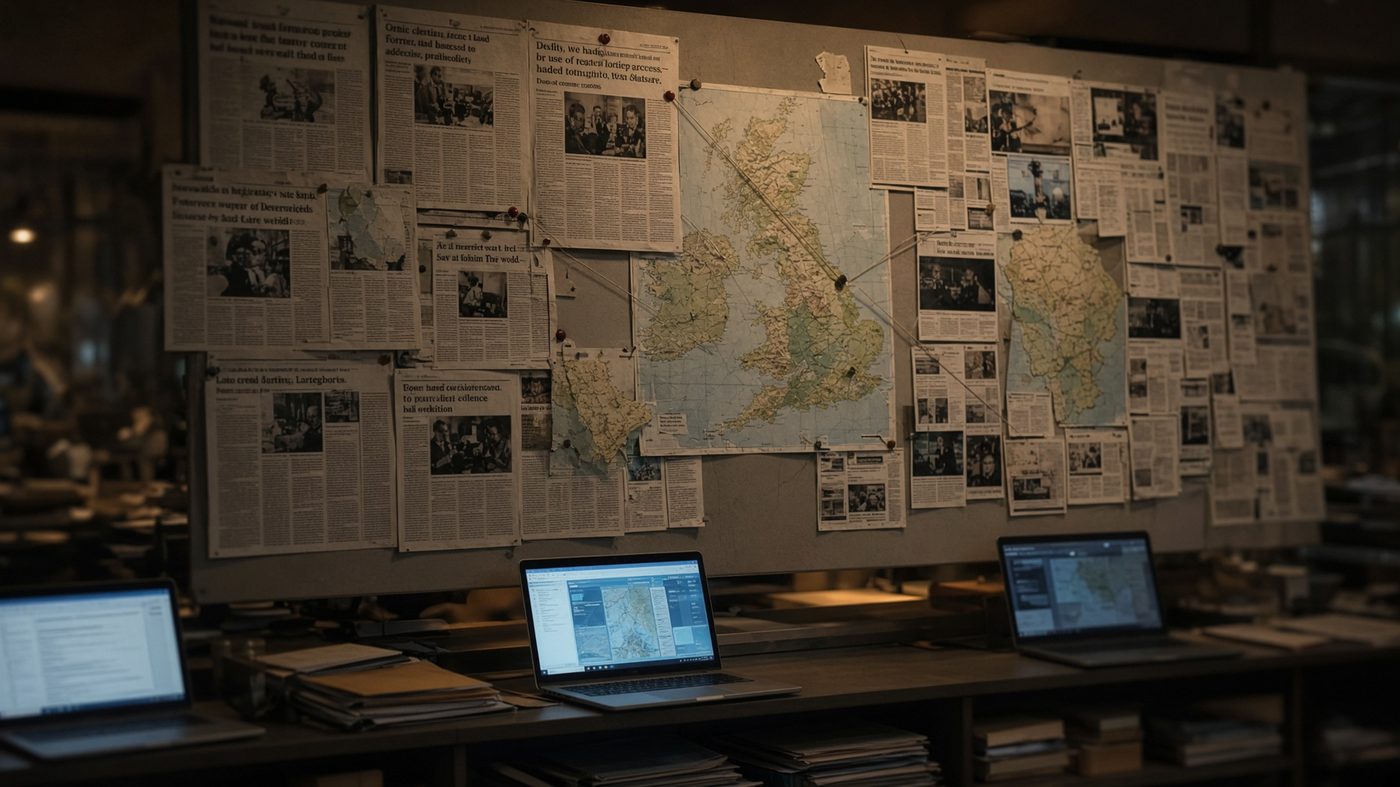
Trend writing fails when it confuses a product cycle with a country. Britain’s technology future is being decided by planning committees, grid connection dates, export-control officers and the location of substations. Demynex tracks five forces because they keep showing up in otherwise unrelated stories.
1. Compute is a land-and-power question
Training runs make headlines. The binding constraints are transmission, water, latency to the City and to Dublin, and whether a local authority will live with a windowless hall. We expect the next two years of UK “AI strategy” to read more like an industrial-property memo than a research paper. The longer note is here.
2. The grid is becoming a software market
More wind without more listening machines is a recipe for constraint payments. Flexibility, interconnectors and digital substations are now as newsworthy as turbines — and far less photographed. Operators who still treat “net zero” as a generation story will miss the procurement. Read the grid note.
3. Public digital rails beat departmental apps
The useful layer is identity, payments, eligibility and shared components — the dull machinery that lets a service ship without rebuilding a nation each time. We watch GOV.UK, the government commercial function, and the NAO more closely than any ministerial app launch.
A trend is a constraint you can still act on. A vibe is a keynote.
4. Industrial autonomy is a labour story
Robot density numbers are a trap. The live question is who programs, maintains and insures the cell, and whether the export licence arrives before the customer walks. Midlands plants are further along than the capital’s conversation. The factory note.
5. Dual-use is the hidden timetable
Sensing, comms, autonomy and materials now sit on both civilian order books and licensing queues. A company can be “deep tech” on Monday and a controlled exporter on Tuesday. We report the forms, not the adjectives.
These five are not a ranking. They are a filter. If a pitch to the desk cannot touch one of them with a UK consequence, it is probably a press release.